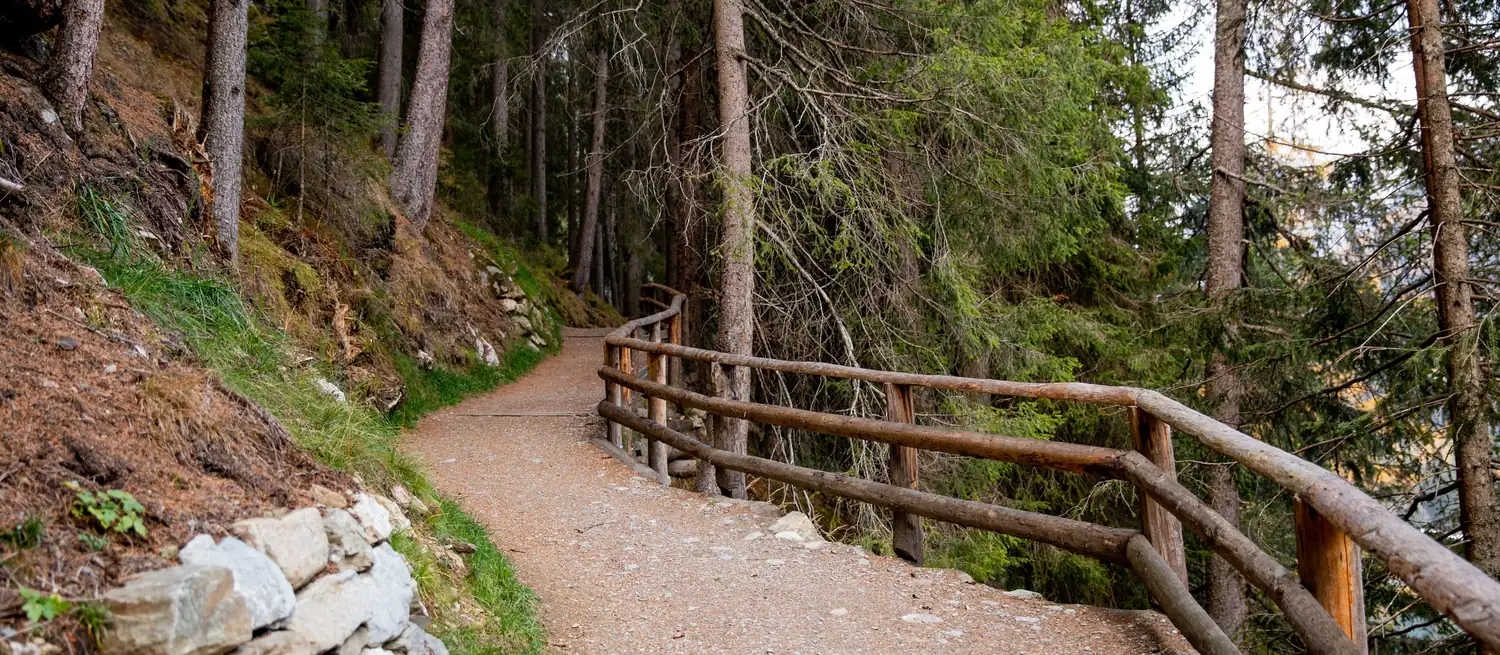
Hiking for beginners
The key basics for a good start – from planning and the right gear to simple tips for your first hike.
Hiking does not have to be complicated at the beginning. With a suitable route, good basic gear and a little preparation you are already well set up. Above all it is important to plan realistically, keep an eye on the weather and not to plan a hike that is bigger than your fitness and experience allow.
Chapter 1: Choosing the right route
Especially at the beginning, the choice of route decides whether a hike stays relaxed or quickly becomes stressful. It is better to choose a route that suits your fitness, experience and how you feel on the day.
Difficulty
Start with easy, well-marked paths and increase step by step. This gives you a feel for distance, ascent and your own pace.
Distance
At the start it is better to plan shorter tours and allow enough time for breaks. That keeps the hike relaxed and avoids unnecessary time pressure.
Weather
Check the weather forecast before every hike. In the mountains in particular, conditions can change quickly and make an easy tour considerably more demanding.
Timing
Start as early as possible and plan the return realistically. This avoids time pressure and leaves enough buffer for breaks, photos or unexpected delays.
Chapter 2: The right gear
You do not need complicated gear to get started. What matters is that shoes, clothing, rucksack and food suit the tour and the weather. Trekking poles can additionally provide more stability, comfort and safety.
Hiking shoes
Well-fitting hiking shoes give support and protect your feet on different surfaces. For a start, a comfortable, stable shoe that suits the tour and terrain is often enough.
Clothing
Wear clothing that suits the weather and does not restrict you on the trail. Several thin layers are practical because you can react flexibly to warmth, wind or changing conditions.
Rucksack
A light, well-fitting rucksack offers space for water, food, a rain jacket and important small items. Pack deliberately and clearly rather than taking unnecessarily much.
Food & drink
Take enough water and small snacks. Especially on longer routes or warm days, drinking and eating regularly helps you stay focused and capable.
Trekking poles
Trekking poles can provide more stability and relieve knees and joints – especially on longer tours, on descents or in uneven terrain.
Chapter 3: Using trekking poles sensibly
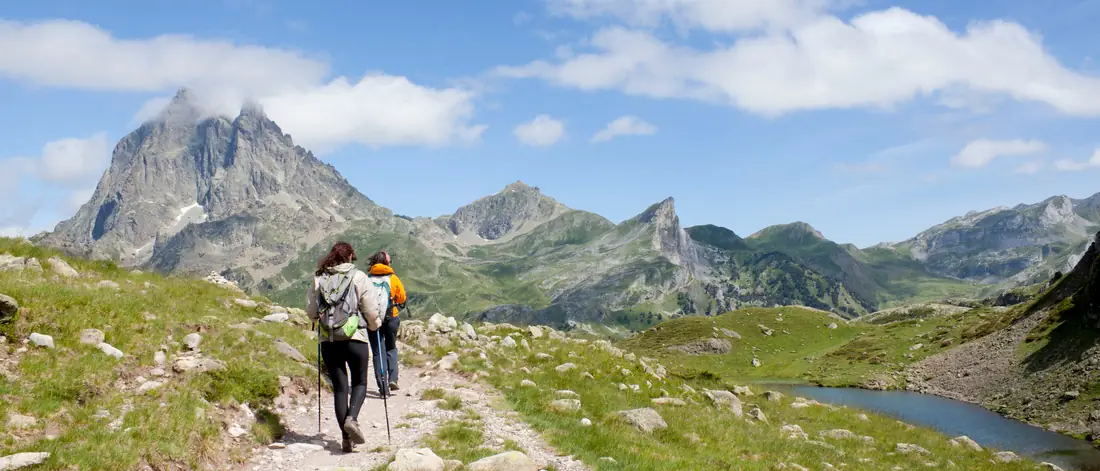
Trekking poles are not a must, but they can be helpful on many tours. They give additional support, improve balance and can relieve knees and other joints – especially on longer routes, on descents or in uneven terrain.
- More stability – On narrow, stony or uneven paths, trekking poles offer additional support and help you control your balance better.
- Relieving joints – On descents in particular, trekking poles can relieve knees and joints and make walking more comfortable.
- More safety – On slippery, steep or changing surfaces, trekking poles give additional support and provide a safer feeling on the trail.
- Adjust them correctly – So that trekking poles can play to their strengths, they should be adjusted to suit your height and the terrain.
→ To the trekking pole guide: setting up, adjusting, caring
Chapter 4: Safety while hiking
Good preparation and a few simple basic rules make hikes more relaxed and safer. As a beginner in particular, you should assess weather, route, your daily form and the way back realistically.
Check the weather – Look up the current forecast before every hike. In the mountains especially, conditions can change quickly – it is better to plan a little more cautiously.
Stay on marked paths – Where possible, use marked hiking trails and follow signs and local recommendations. That way you reach your destination more safely while also protecting nature.
Take enough water and food – Take sufficient water and small snacks. Drinking regularly and having some energy in between helps you stay focused, even on longer tours.
Know your limits – Choose tours that suit your fitness and experience. Plan enough breaks and rather turn back earlier if the weather, terrain or your gut feeling do not fit.
Phone and emergencies – A fully charged battery can be important in an emergency. Where possible, tell someone you trust about your planned route and roughly when you will be back.
Small emergency kit – A small first-aid kit, some cash and a light rain jacket take up little space but can be very helpful on the trail.
Chapter 5: Common beginner mistakes
On the first hikes in particular, small mistakes often happen that are easy to avoid with a little preparation. With the following tips you will start your next hike more relaxed and safely.
✗Route chosen too demanding
Start with easy hikes and increase the difficulty step by step. That way you gain experience and get to know your own limits better.
✗Weather underestimated
Even with a good forecast, conditions can change quickly. Check the forecast before you set off and take weatherproof clothing if needed.
✗Too little water taken
Enough fluid is especially important on warm days. Plan enough water for the whole tour and rather take a little more.
✗Unsuitable shoes or clothing
Comfortable hiking shoes and suitable clothing increase comfort and provide more safety on different surfaces.
✗Started too late
Start as early as possible and allow enough time for breaks and the way back. That avoids unnecessary time pressure and lets you enjoy the tour more.
✗No breaks planned
Deliberately plan short breaks. This helps you keep your pace, drink enough and enjoy the hike more.
Frequently asked questions
Short answers to the most important beginner questions.
Which hike is suitable for beginners?
Easy hikes on well-marked paths with a moderate distance and few metres of ascent. What matters is that the tour suits your fitness, experience and how you feel on the day.
What should I take on my first hike?
Comfortable hiking shoes, weather-appropriate clothing, enough water, small snacks and a light rucksack. Depending on the tour, trekking poles can provide additional support.
Do I really need trekking poles?
No. Trekking poles are not a must – but on longer routes, on descents or in uneven terrain they provide more stability and comfort.
How much water should I take?
That depends on the route, weather, duration and your personal needs. It is better to plan a little extra – especially on warm days.
What do I do in bad weather?
Check the forecast before you set off and adjust the tour if necessary. In a thunderstorm or strong wind it is better to postpone the hike.
How do I find suitable hikes?
Well-signposted paths and well-known routes with an easy difficulty rating are ideal for a start. You will find inspiration in our hiking regions section.
Discover BERGBOUND products
Looking for reliable outdoor gear for your next hike? Discover functional products by BERGBOUND – developed with a focus on quality, reliability and durability.
Questions? We are happy to help.
Do you have questions about our products or about BERGBOUND? Simply send us an email – we look forward to your message and will reply as soon as possible.